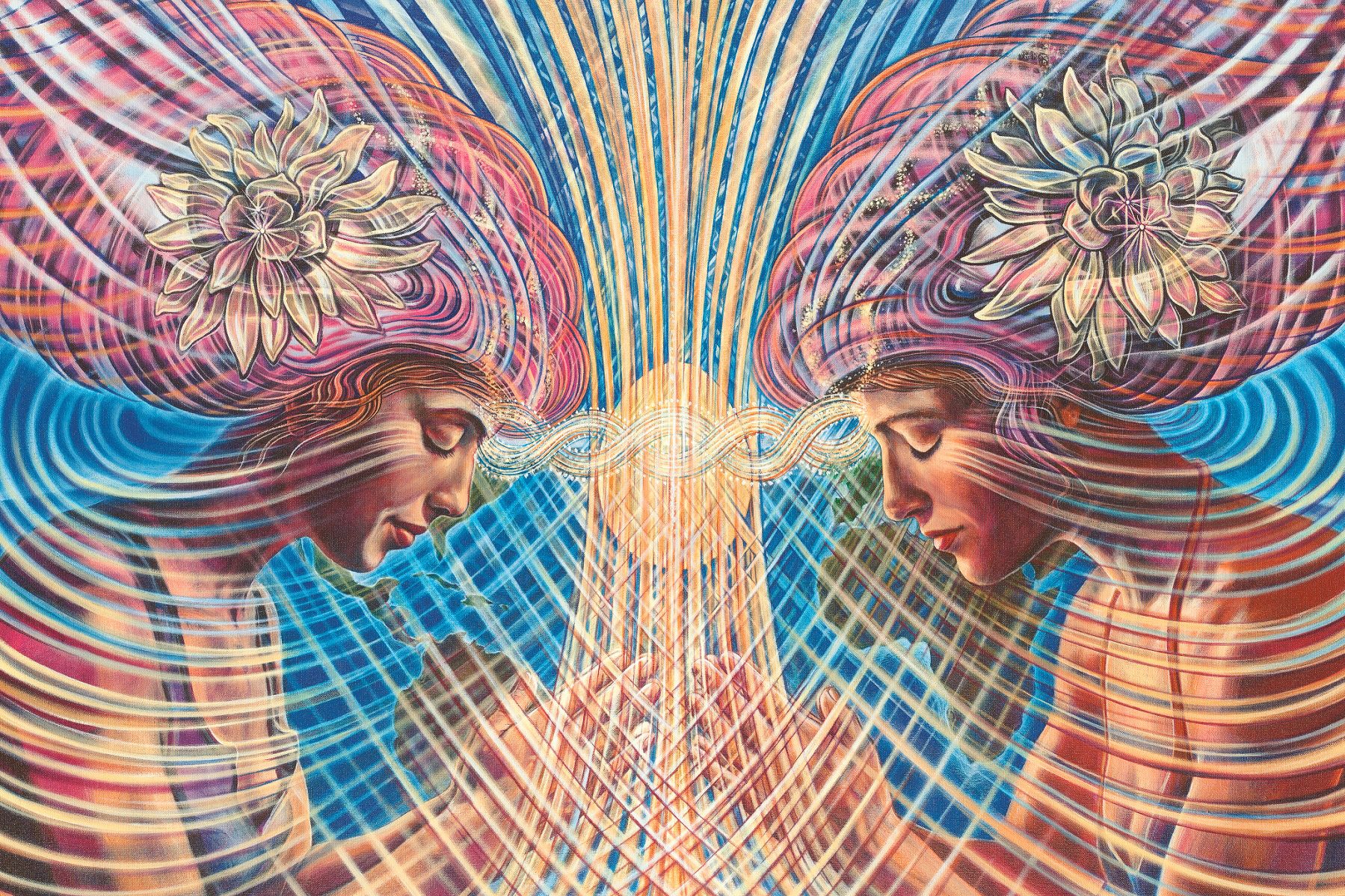
Does the soul continue after death — and if so, does it remain “us”? This question touches something very personal, because it asks whether the sense of “I” survives the transition we call death. The deeper view is that something of us does continue, but it may not remain exactly as we currently understand ourselves.
What Continues?
At the point of death, the physical body is left behind, but the subtler aspects of the individual remain. These include awareness, memory, tendencies, and the sense of being a distinct presence.
For a time, the person often feels very much the same. They may recognise themselves, recall their life, and even feel connected to those they have left behind. In this early stage, the continuity of identity can be quite strong.
The Personal Self
What we usually call “us” is a combination of personality, memory, habits, beliefs, and emotional patterns. Much of this continues immediately after death.
However, this personal self is not the deepest layer of who we are. It is more like a surface identity — real and meaningful, but not permanent.
Over time, aspects of this identity may begin to soften, dissolve, or transform. Attachments loosen, emotional patterns settle, and the individual may begin to experience themselves in a broader and less limited way.
The Deeper Self
Beneath the personality is a more fundamental presence — often described as the soul or essence. This is the part that does not come and go with each lifetime.
It carries the deeper continuity of existence. While the personality may change from life to life, this underlying essence remains constant.
In this sense, we continue — but at a deeper level than personality alone.
Do We Stay the Same?
Immediately after death, many people do feel like the same person they were before. But as the journey unfolds, change is natural.
● Some memories may fade in importance
● Emotional attachments may soften
● A wider understanding of life may emerge
● The sense of identity may expand beyond the individual personality
So while there is continuity, there is also evolution. The self is not fixed — it is unfolding.
Recognition and Connection
One of the most reassuring aspects reported in many accounts is that recognition still occurs.
People often describe meeting loved ones, recognising them, and being recognised in return. This suggests that the thread of identity remains intact, at least in the early stages after death.
Connection, love, and relationship do not simply disappear. They continue, though often in a more refined and less possessive form.
Beyond the Individual Self
As consciousness deepens, there can come a point where identity shifts more radically.
The sense of being a separate individual may begin to give way to a broader awareness — one that feels more unified, more connected, and less defined by personal boundaries.
For some, this is gradual. For others, especially those who have explored inner awareness deeply, it may already be familiar.
In Essence
So does the soul remain “us”? The answer is both yes and no.
● Yes — because awareness, memory, and identity often continue after death
● Yes — because recognition and connection remain
● No — because the personality is not the deepest level of who we are
● No — because the self continues to evolve beyond its previous form
● And ultimately — because what we truly are is greater than the person we believe ourselves to be
In this way, death does not erase us — it reveals more of what we are.