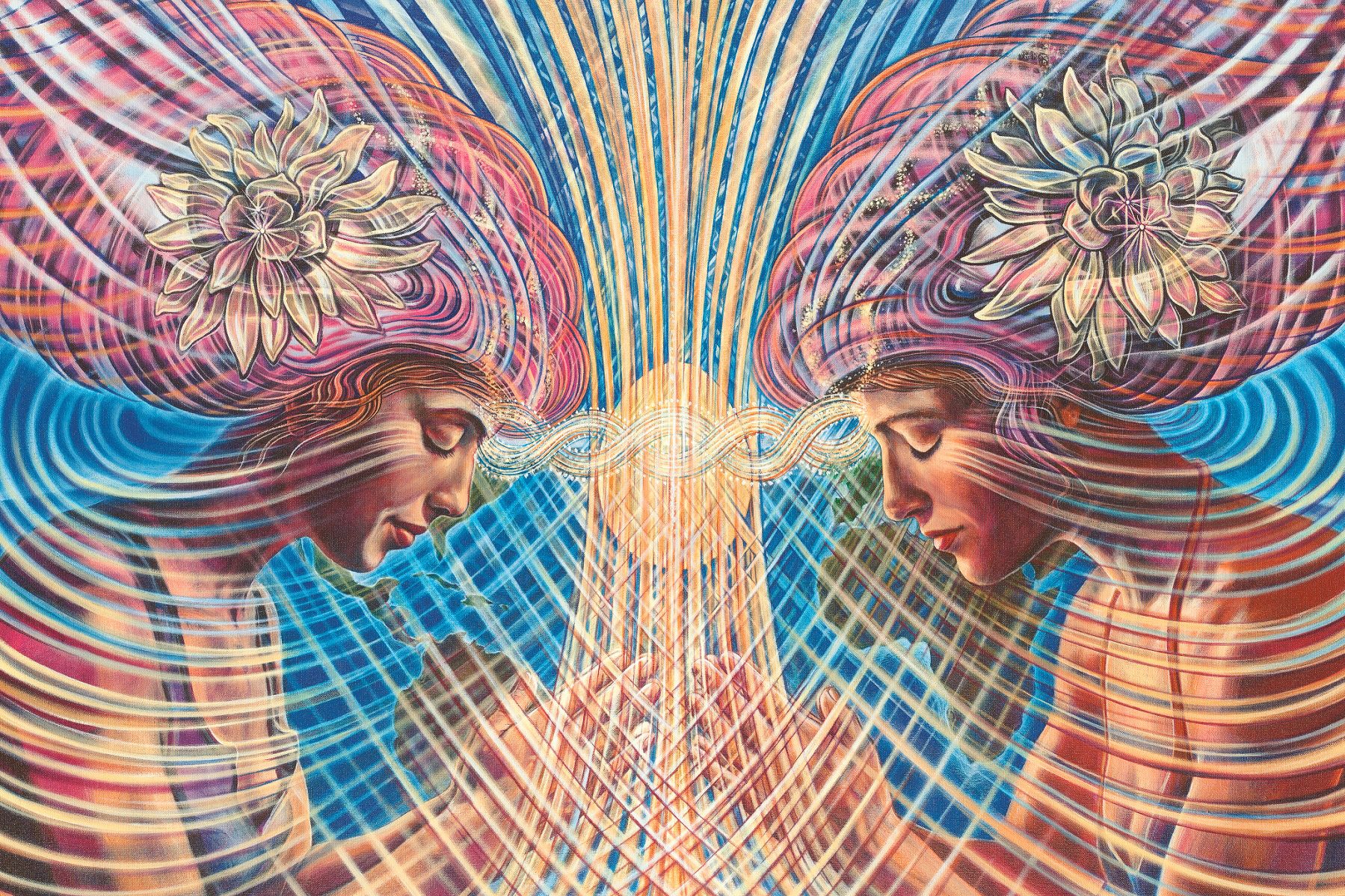
As we explore the nature of the soul, a deeper question begins to emerge. If the soul evolves and grows through experience, does it always remain an individual identity, or can it move beyond this sense of separateness? Is individuality the final expression of the soul, or a stage within a much larger reality? A deeper view suggests that what we experience as individuality may be both real and temporary.
The Nature of Individual Identity
In everyday experience, we feel ourselves to be a distinct individual.
This sense of “I” provides continuity, meaning, and the ability to relate to others. It allows for personal experience, choice, and growth. From this perspective, individuality appears central to the journey of the soul.
Individuality as a Phase
A deeper perspective suggests that individuality may not be the final state.
Just as a wave has a distinct shape while remaining part of the ocean, the soul may express individuality while still being inseparable from a greater whole. The sense of being separate may arise from how awareness is focused, rather than from an absolute division.
Expansion Beyond the Personal Self
Some individuals report experiences where the boundaries of self begin to soften or dissolve.
● A sense of unity with all life
● Awareness extending beyond the body and mind
● A feeling of being both personal and universal at once
These experiences suggest that identity may expand rather than disappear, revealing a broader dimension of being.
Does Individuality Disappear?
The idea of transcending individuality can sometimes feel unsettling.
However, it may not involve the loss of identity, but a transformation in how it is understood. The personal self may continue to function, but no longer as a separate or isolated entity. Instead, it becomes an expression of something more expansive.
The Paradox of Unity and Uniqueness
A deeper view suggests that unity and individuality are not opposites, but complementary.
Each individual may be a unique expression of a shared essence. In this sense, transcending individuality does not erase uniqueness — it reveals its deeper context.
In Essence
● Individuality provides a sense of identity and continuity
● It may be a phase within a larger unfolding
● Experiences of expansion suggest identity can broaden
● Transcendence may transform rather than erase the self
● Unity and uniqueness can coexist
In the end, the question may not be whether individuality is lost, but whether it is seen differently. What begins as a sense of being separate may gradually be recognised as a unique expression within a vast and interconnected whole.